Towanda!!
YOU and Your Story Matters Too!!!

To the Mothers Who Were Not Abusive: You Have a Right to Tell Your Story
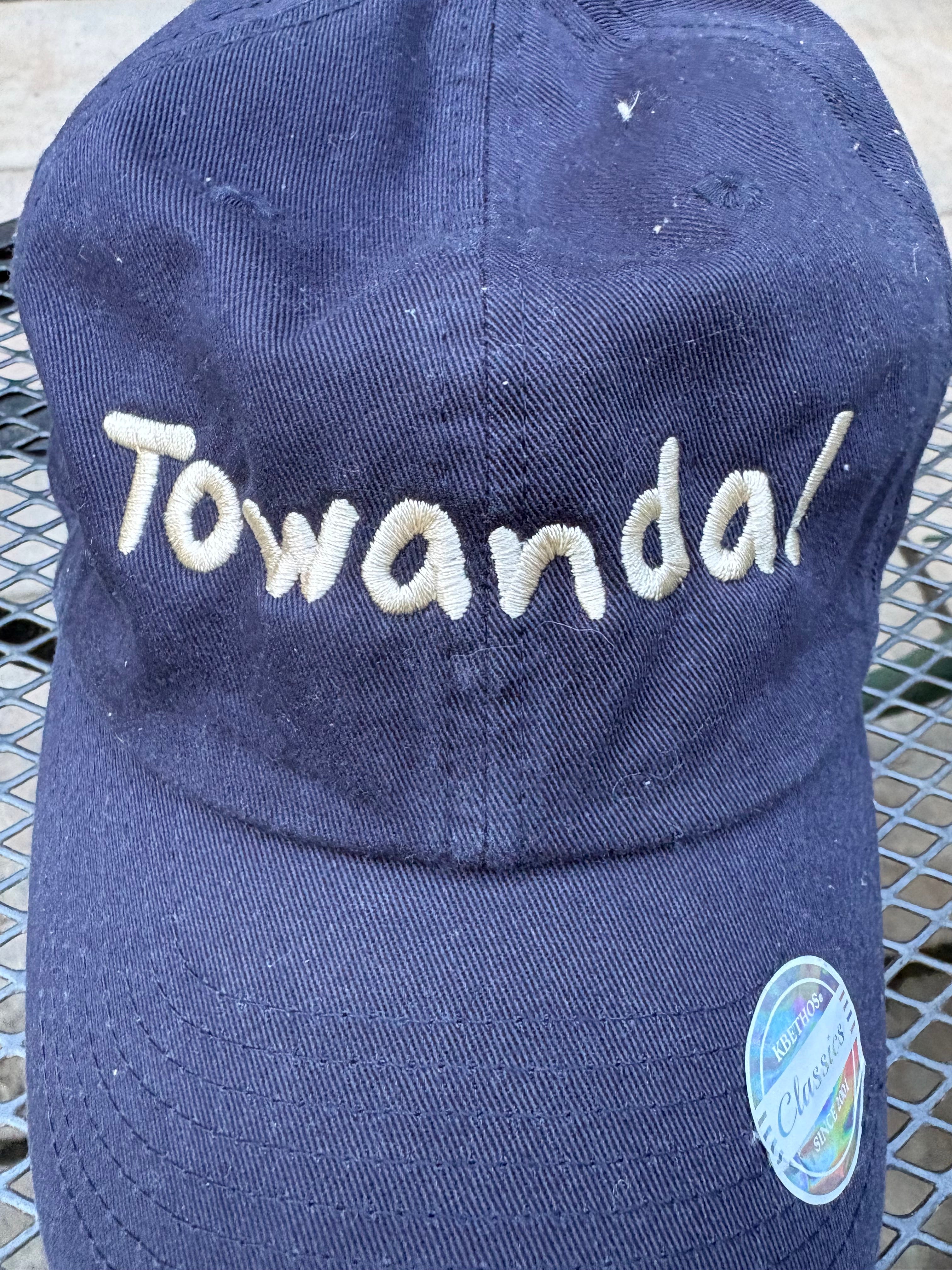
This Mother’s Day, I was one of the fortunate moms who attended the first Mother’s Day Retreat in Lake Tahoe, hosted by Mending Space Retreats, founded by Nancy Kerry. While there, another estranged mother handed me a hat with a single word embroidered across the front:
Towanda.
At first glance, it’s just a reference to a well-loved movie. But for those who know the story, Towanda was a declaration of strength. A refusal to be diminished. A reminder that a woman has a right to take up space in her own life.
When she gave me that hat, I understood immediately what she meant.
Not “fight harder.”
Not “be angrier.”
Not “prove everyone wrong.”
Something simpler and more profound:
Do not disappear.
For many estranged mothers—especially those who were not abusive—the pressure to disappear can be overwhelming. We are told that if our child has cut contact, we should remain silent. If we defend ourselves, we’re accused of being defensive. If we express grief, we’re accused of making it about us.
The message is clear: suffer quietly.
Towanda is a sign that we don’t have to accept invisibility.
We can respect our adult child’s choices while still honoring our own experience.
We can acknowledge our imperfections without accepting a false identity.
We can grieve without apologizing for grieving.
We can tell the truth about our lives. We do not have to stay hidden.
Towanda.
Not a cry of revenge.
A declaration of dignity.
A declaration of resilience and self-respect.
There is a narrative that has become increasingly common in our culture: if an adult child cuts off contact with a parent, the parent must have done something terrible.
For mothers living in the land of estrangement, that assumption can feel like a second loss.
First comes the heartbreak of losing a relationship with a child. Then comes the judgment. Friends become cautious. Family members choose sides. Therapists, social media influencers, and strangers online confidently explain what “must have happened.”
The mother is rarely asked for her side of the story.
Allow me to be clear: abusive parents exist. My own father was one. Some adult children separate from parents to protect their well-being, and that decision deserves respect.
But there is another group of mothers whose experiences frequently go unheard.
These are mothers who loved imperfectly, as all human beings do, but who were not abusive.
Mothers who worked multiple jobs to keep the lights on.
Mothers who sat through dance recitals, football games, school conferences, and late-night emergencies.
Mothers who made mistakes, apologized for them, and kept trying.
Mothers who devoted years—even decades—to their children’s lives, only to find themselves suddenly erased from them.
Many of these women live with a unique kind of grief. Unlike death, estrangement offers no closure. There is no funeral, no community support, no socially recognized mourning period.
There is only absence.
Birthdays pass.
Holidays arrive and disappear.
Grandchildren grow up in photographs viewed from afar, if at all.
And through it all, these mothers are often told to remain silent.
If they speak about their pain, they risk being accused of refusing accountability.
If they defend themselves, they are told that defending themselves proves they are the problem.
If they ask questions, they are criticized for failing to honor boundaries.
It becomes an impossible standard: suffer quietly or be blamed for speaking.
The truth is that family relationships are rarely as simple as social media makes them appear.
Human beings are complicated.
Families are complicated.
Conflict is complicated.
Adult children have every right to make decisions about their relationships. They are not obligated to maintain contact with anyone.
At the same time, mothers have every right to acknowledge their own reality.
They have a right to say:
“I was not perfect, but I was not abusive.”
“I loved my child.”
“I do not recognize the story being told about me.”
“I am grieving.”
Those statements are not acts of manipulation.
They are acts of self-respect and empowerment.
One of the most damaging consequences of estrangement is the pressure placed on mothers to assume total responsibility for every broken relationship. Some certainly should examine their behavior. Self-reflection is healthy for everyone.
But self-reflection is different from self-erasure.
A mother should not be required to revise her entire life story to be considered compassionate.
Nor should she be expected to bear all responsibility for relationships involving multiple people, personalities, and perspectives.
Sometimes families fracture because of longstanding misunderstandings.
Sometimes mental health struggles are involved.
Sometimes spouses, partners, or other relatives influence the dynamic.
Sometimes expectations collide.
Sometimes people experience the same family history in profoundly different ways.
Acknowledging complexity is not the same as denying accountability.
It is simply telling the truth.
To the mother reading this who knows in her heart that she was not abusive:
You are allowed to grieve.
You are allowed to miss your child.
You are allowed to reject false narratives.
You are allowed to speak your truth with dignity.
And you are allowed to build a meaningful life even while carrying unanswered questions.
Estrangement does not erase your years of love.
It does not erase your sacrifices.
It does not erase your humanity.
You deserve the same compassion that our culture so readily extends to everyone else involved in these painful family stories.
Your voice matters.
Your story matters.
And you do not need anyone’s permission to tell it.
Towanda symbolizes the refusal to disappear or be identified solely by accusations or assumptions. Instead, it is about boldly regaining one’s voice as a parent, not to oppose your child, but to affirm that your story holds value as well.
Yes, your story matters.
Yes, you matter.
Yes, Towanda!!!
You get it Roberta. I’m most grateful to you for your support of mothers. Moms (and dads) must not disappear. Our story and existence matters.
Your creative insights are outstanding! I hope you sleep better at night, knowing that innumerable people are more at peace than before. I must though, with utmost respect, disagree with your statement, “They (adult children) are not obligated to maintain contact with anyone.” Again, you have triggered off another paper I have in mind where will address this very subject. Thanks Roberta!:)